


“It was the call, the many-noted call, sounding more luring and compellingly than ever before.”
— Jack London, Call of the Wild
In 2020, I dreamed about a white wolf.
I was back at my parents’ house in Montana. My father had open heart surgery, and the world was contracting to something no one had a map for.
In the dream, I moved from room to room. The wolf was circling outside, tracking me through the windows. Glass between us. I checked the locks, the latches. Not afraid. Just watching it circle.
Then the wolf was inside. It lay down on top of me, and I felt its weight. Slowly, it disappeared into me.
When the Wolves Came Back
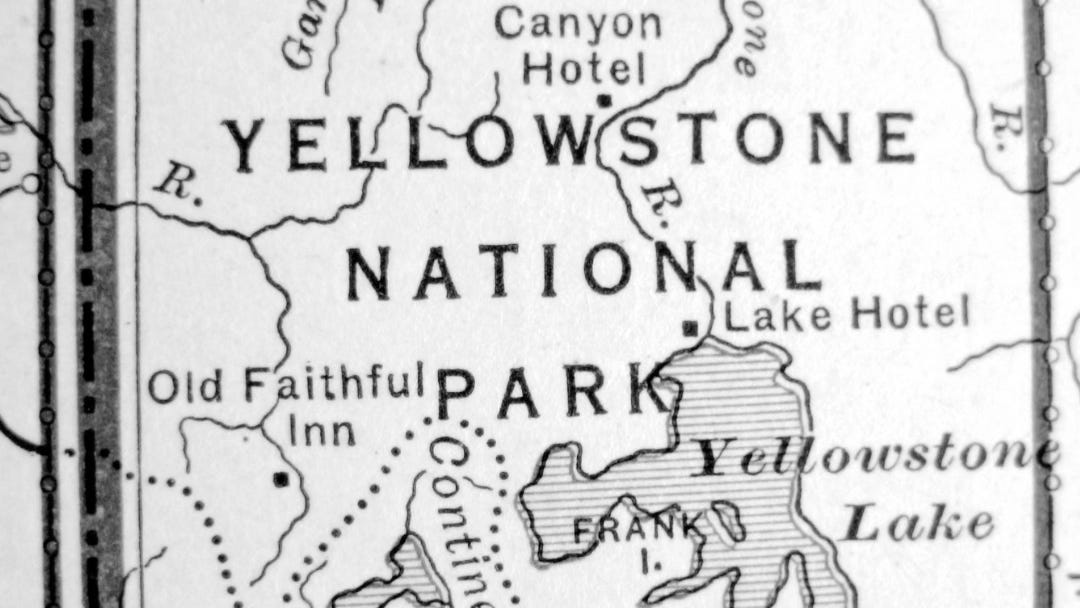
I was fifteen when the wolves came back to Yellowstone.
The reintroduction happened in January 1995. Fourteen wolves from Canada, released into the Lamar Valley. I wrote a school report about it. Hours of research into what the absence of wolves had done to the ecosystem, and what their return might do.
What I learned was this: Yellowstone without wolves wasn’t just missing wolves. It was missing everything wolves kept in balance. The elk overgrazed the riverbanks. The trees thinned. The rivers shifted course without the root systems to hold the soil.
When the wolves returned, the elk moved differently, avoiding open terrain and letting the vegetation recover. The streambanks, no longer stripped bare, began to hold. Scientists called it a trophic cascade: one species restored, and the entire system remembered how to be itself.
I had grown up watching Yellowstone burn in 1988 and recover faster than anyone expected. Now I was watching it remember something older than the fire.
[Last week, I wrote about the summer Yellowstone burned — and what the land’s recovery taught me about belonging. If you missed it, you can read it here.]
The Book That Stayed
Jack London’s Call of the Wild was one of the first books I remember feeling, not just reading. What held me wasn’t the adventure. It was Buck. The domesticated dog heard something ancient in the wilderness, something that had always lived in him beneath the training, beneath the taming. What changed was recognition.
That idea lived in me for years without a frame: that wildness isn’t acquired. It waits. It calls. And when the conditions are right, you can hear it.
When the World Stopped
I stayed in Montana for a year.
My father recovered. The world stayed strange. That year moved differently. The house was still in a way my life in New York never was. Evenings without a calendar pulling at the edges of everything. The kind of stillness that either terrifies you or tells you something.
It told me something. The dream came sometime that year. The white wolf, circling. Entering. Disappearing into me.
I’ve thought about it many times since. What I keep returning to is the feeling: return. Power. The wolf was coming home.
The Coordinate: Honor What’s Yours
In the ENOUGH Principle, Honor What’s Yours means: measure your life against your own values, not someone else’s.
It’s the coordinate that asks you to stop measuring yourself against someone else’s map and start listening to the one you were born with.
Most of us spend years constructing a version of ourselves that other people can understand. The right credentials, the right ambition. And somewhere in all that building, we cover over the wild, inconvenient parts that don’t translate to a resume.
Yellowstone lost its wolves for seventy years. The ecosystem didn’t forget what it needed.
Honor What’s Yours doesn’t ask you to build something new. It asks you to stop covering what was already there.
Ask yourself:
What part of yourself existed before the world told you who to be?
What have you been circling without letting yourself name it?
What would come home if you stopped keeping it out?
What the Culture of More Gets Wrong
We’re taught that identity is something you construct. Worth is performed and confirmed by others. Add enough, and eventually you’ll feel like enough.
This is scarcity versus sufficiency with selfhood.
Scarcity says: you are what you build. Power comes from what you’ve achieved and who can see it.
Sufficiency says: who you are runs deeper than what you’ve built.
A Small Practice
Think back to who you were before the building started. Not necessarily a child. Just an earlier version, before you learned to perform for others.
What did that person love without needing a reason?
What felt true before it needed to be defensible?
You don’t have to go back.
But you might want to check: is that part of you still in the house? Or have you been keeping it outside, circling, wondering when you’ll let it in?
See you next week.
P.S. I'd love to know: is there something in you that’s been waiting to come home? What would it take to let it in?