


“Books are a uniquely portable magic.”
— Stephen King, On Writing: A Memoir of the Craft
I finished The Count of Monte Cristo for the first time this past Saturday at 1 am, then lay there in the dark, unable to sleep, still thinking about Edmond Dantès. I hadn’t stayed up past a reasonable hour for a book in years. I felt like I was eleven again, flashlight under the covers, certain that whatever was happening on the page mattered more than whatever was supposed to happen next in real life.
The book had been on my list forever. A PBS adaptation came out this year, and two friends told me separately that it was one of their favorite books of all time. That was enough. I picked it up expecting a classic.
What I didn’t expect was to feel, again, like a kid who couldn’t put a book down.
The Whole World in One Room
I grew up in a small town, but my elementary school library felt like the whole world. I loved walking in and smelling that almost vanilla-like scent of the old books, a smell I could still pick out today. Any book on those shelves could take me somewhere I’d never been or teach me something I didn’t know yet.
Ahead of the Scholastic Book Fair, the once-a-year chance to buy books right at school, they’d send the flyer home. I saved my allowance for weeks, waiting. I remember the newsprint on those thin pages, and the sheer excitement of seeing everything that existed, even the books I’d never be able to afford.
The summer I was in sixth grade, I was reading Stephen King’s Pet Sematary. I remember exactly where I was sitting in my bedroom and exactly how unwilling I was to stop. My mom would come find me and tell me to go outside. Not because I was doing anything wrong. Because I hadn’t moved in hours, and she knew a kid needed sun and dirt and other kids, not just Stephen King and a dead cat that wouldn’t stay dead.
She had to make me stop reading. That was the problem back then.
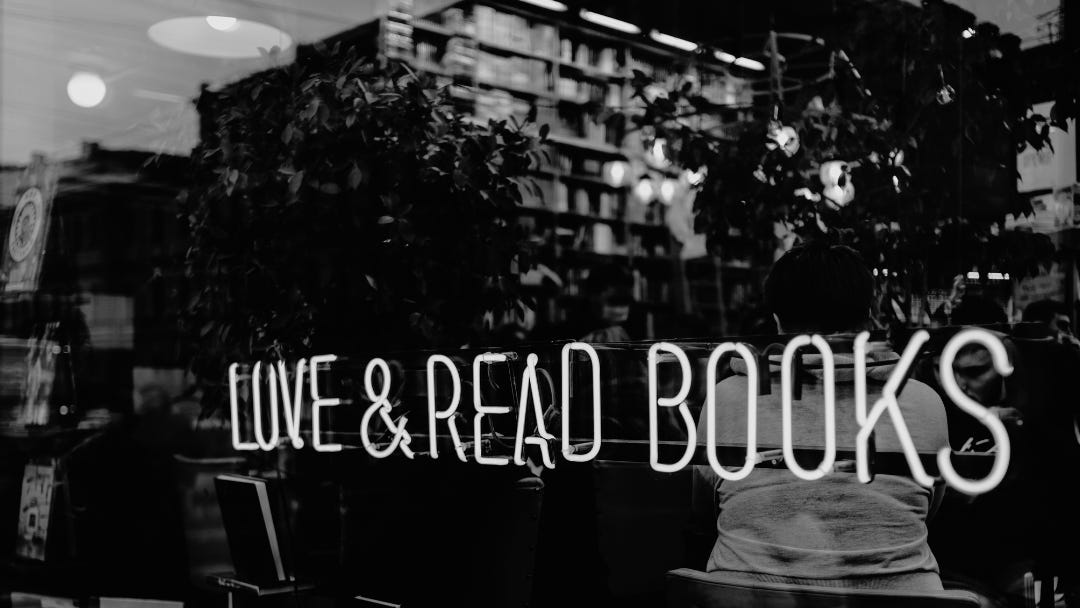
What Changed
When I moved to New York in 2008, reading came with me. I read on the subway every morning, the city moving past in flashes while I stayed inside someone else’s story.
Then, somewhere in the ten years that followed, I stopped reading. Not all at once. I didn’t wake up one day and decide to quit. It just got crowded out, first by exhaustion, then by the version of me that used every spare minute to catch up or get ahead. By the time I was approaching my first sabbatical, I hadn’t read a book in longer than I wanted to admit.
The pattern repeated seven years later. In the last stretch before I left my director role, I went three full months without reading anything before I even noticed the gap. Three months of a habit I’d had since childhood, gone, and I didn’t clock it until it was already over.
When I finally left and took my second sabbatical, reading found its way back again. Not because I told myself to. Because the space opened up, and that’s where I went.
The Coordinate: Grow Curiously
In the ENOUGH Principle, Grow Curiously means keep asking why.
I used to think that was about staying intellectually sharp, questioning assumptions, and chasing answers. But this pattern taught me something more specific. Sometimes the question isn’t why does this work? It’s why did I stop?
Reading has never been about self-improvement for me. I wasn’t reading Pet Sematary to learn anything. I read Monte Cristo without a single lesson in mind, just the pure pleasure of turning the page. That’s exactly what made it disappear when life got full, and exactly what made it the first thing I reached for once there was room again.
Joy doesn’t announce itself as essential. It slips away when you stop making space for it, and finds its way back the moment you do.
What the Culture of More Gets Wrong
We treat joy like a reward, something you earn once everything else is handled.
This is scarcity versus sufficiency with joy.
Scarcity says: joy is what’s left over after the real work is done, if there’s anything left over at all.
Sufficiency says: joy isn’t a reward. It’s a requirement. It’s one of the things that keeps you human, and it doesn’t need to earn its place on the list.
A Small Practice
This week, pick one thing back up, something you stopped doing without deciding to stop. The book on your nightstand. The instrument in the closet. The walk with no destination.
Don’t judge how long it’s been gone. Just ask: why this one? What does it still give you?
See you next week.
P.S. What’s the thing you used to do just because you loved it, that got lost somewhere along the way?