


“The mean relative to us, that amount which is neither too much nor too little, and this is not one and the same for everybody.”
— Aristotle, Nicomachean Ethics
We tell the story wrong.
Goldilocks knew what she was looking for. She just hadn’t found it yet. She tried the porridge that was too hot. She tried the porridge that was too cold. Then she kept going until she found the one that was right.
But somewhere along the way, “Goldilocks” became an insult. A word for someone who can’t just be satisfied with what’s in front of them. We forgot that finding “just right” requires getting it wrong first. More than once.
The story was never about manners. It was about what happens when you don’t stop at “wrong” and keep going until something finally fits.
That’s the Goldilocks Zone. And most of us never find it because we stop too soon or we overcorrect so hard in the other direction that we end up just as lost.
Brass Stencils
When I moved from my second apartment, on Staten Island, to a shared place on the Upper West Side, I couldn’t afford much of a moving service. My new apartment barely had a kitchen. So I purged.
Most of it made sense. Pots I never used and things that had been taking up cabinet space out of habit, not love.
But somewhere in that purge, I also let go of a set of brass letter stencils I’d found in my grandfather’s workshop. They didn’t take up room. I’d always loved them. I gave them away anyway, caught in the momentum of getting rid of everything I could.
I’ve thought about those stencils more than a few times since. They’re the kind of object you don’t replace. You can only remember.
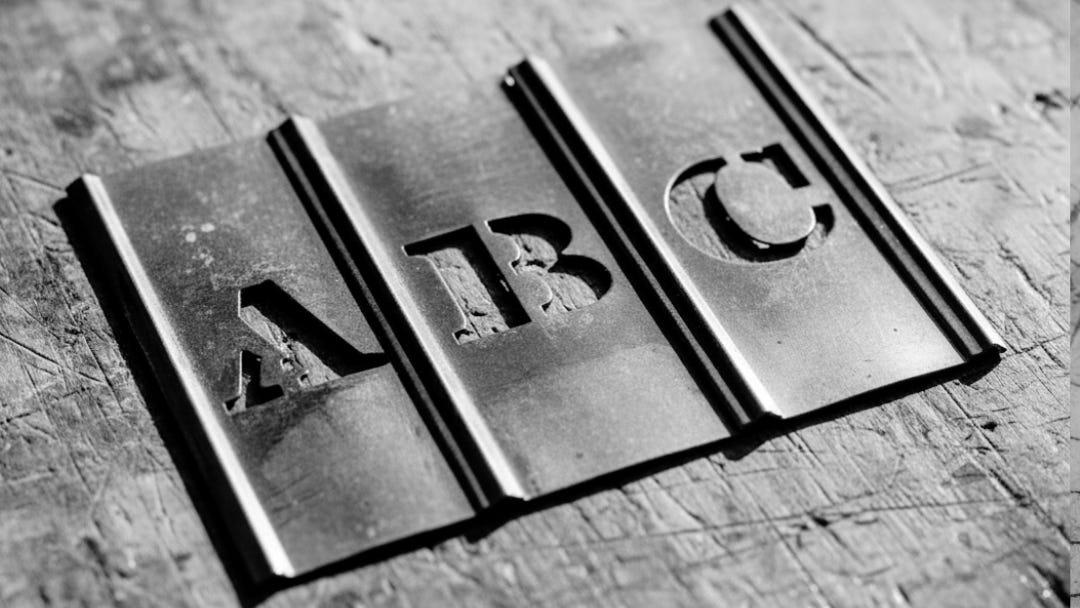
Too Cold
Less than a year later, I was buying back kitchen equipment I’d given away in that same purge.
That’s when I noticed the pattern. I wasn’t getting rid of things because they didn’t fit my life. I was getting rid of things because subtraction felt like the goal itself, and I’d overshot it.
For most of my first decade in New York, that overcorrection made a strange kind of sense. My apartment was where I slept. My real living room was Rudy’s, the dive bar on the corner. Home didn’t need much because home wasn’t where I lived.
Just Right
After the pandemic, I moved outside the city, and something in me started to enjoy home in a way it hadn’t before. Baking bread and pizza dough from scratch. Mixing a drink worth staying home for. Taking care of a space because I wanted to be in it.
That’s when “just right” finally came into focus. No pull toward more. No urge to subtract further. Just enough.
These days, what I keep is small but specific. A KitchenAid mixer that earns its counter space. A fully stocked bar means the best drink of the night is the one I make myself. Neither one has ever made me question the choice. That’s how I know.
Where the Compass Points
Aristotle called this the mean: the right amount of something, not a fixed point on a scale, but the amount calibrated to the person living it. My mean wasn’t going to be the same as my roommate’s, my grandfather’s, or anyone who spends most of their time at a bar down the street. It had to be mine to find.
When you bring the Compass here, it doesn’t ask how much or how little. It asks what’s actually yours:
Notice: The cost of a decision doesn’t always show up the day you make it. The stencils felt like progress when I gave them away. The loss arrived later.
Undo: Releasing what no longer fits requires knowing what fits in the first place. The goal is always clarity, not a number in either direction.
Honor What’s Yours: Just right isn’t a standard someone else can set for you. It’s the point where your life stops asking you to adjust it.
What the Culture of More Gets Wrong
We treat every question of enough as a competition with two sides. More is ambition. Less is discipline. Pick one and optimize for it. Neither asks what actually fits.
This is scarcity versus sufficiency with what balance actually means.
Scarcity says: there’s a right answer, and it’s absolute. Pick a side and commit.
Sufficiency says: enough isn’t a number. It’s the point where nothing feels excessive, and nothing feels missing. And only you know where that is.
A Small Practice
This week, pick one area of your life and ask yourself where you actually are:
Too hot: you’ve been adding past what actually fits.
Too cold: you’ve been stripping back past what you actually need.
Or somewhere in between
You don’t have to fix it this week. Just locate yourself honestly. Goldilocks didn’t find her just right by guessing. She had to try what didn’t fit first.
Getting it wrong is part of getting it right.
See you next week.
P.S. Where are you right now: too hot, too cold, or somewhere in between? And what would just right actually look like?